
Should you give your part-time admin AI tasks or keep them yourself?
A simple sorting exercise tells you which daily tasks belong to a chatbot, which belong to a human, and which belong in the trash.
- Sort by what a task needs: speed and retype, or judgment and relationships.
- Anything that turns one input into one standard output is a candidate for AI.
- Anything a client would want a specific person to answer stays with a human.
- You can run the sort this week with tools you already pay for.
It is 2 p.m. on a Tuesday and you have forwarded the same email twice and retyped the same client details into a second form. Somewhere in your head there is the question that will not leave: should this go to AI, or is this the work the part-time admin is kept for? The honest answer is that most owners do not need to pick a side. The work itself tells you what to do with it, if you look at it in the right order.
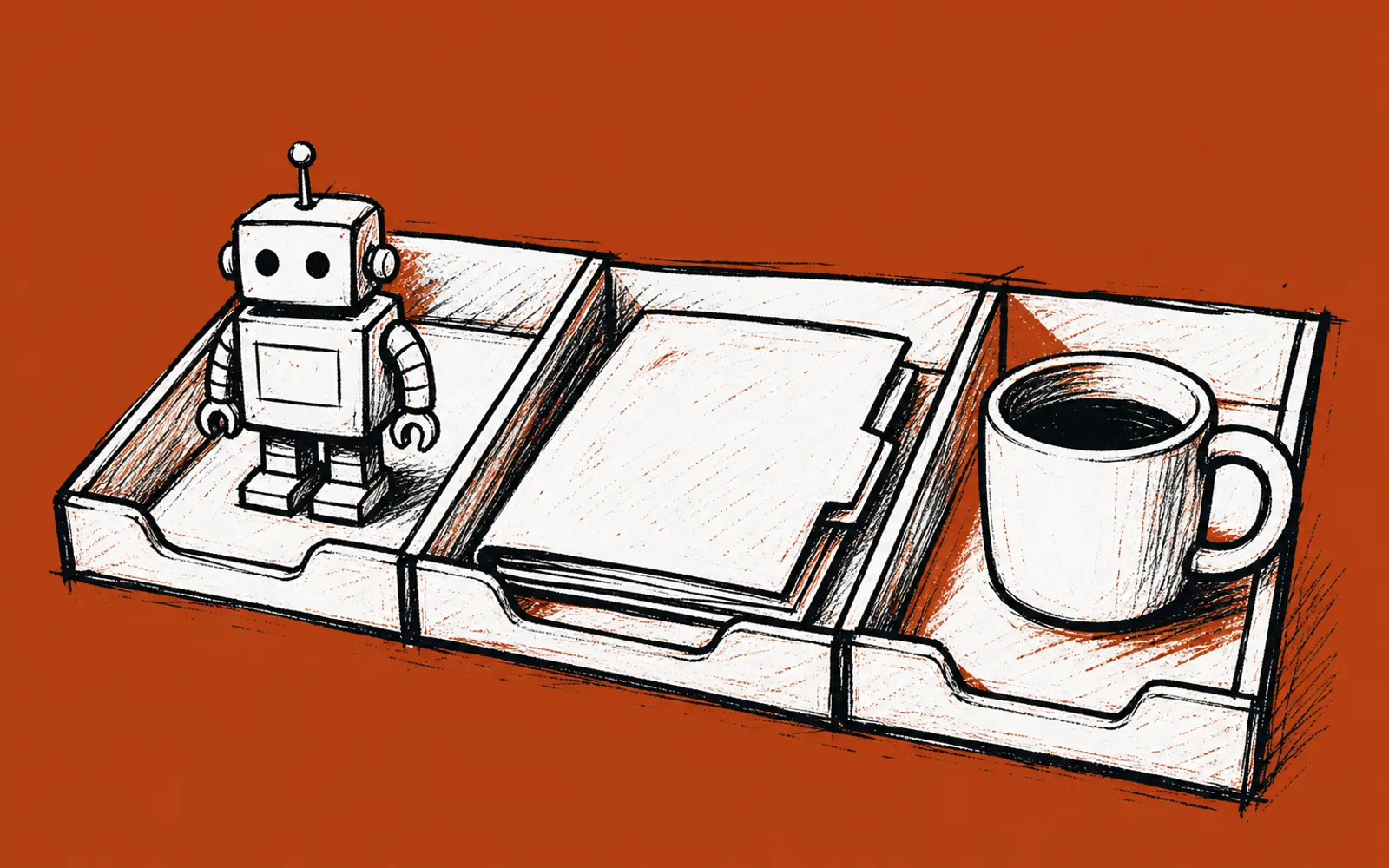
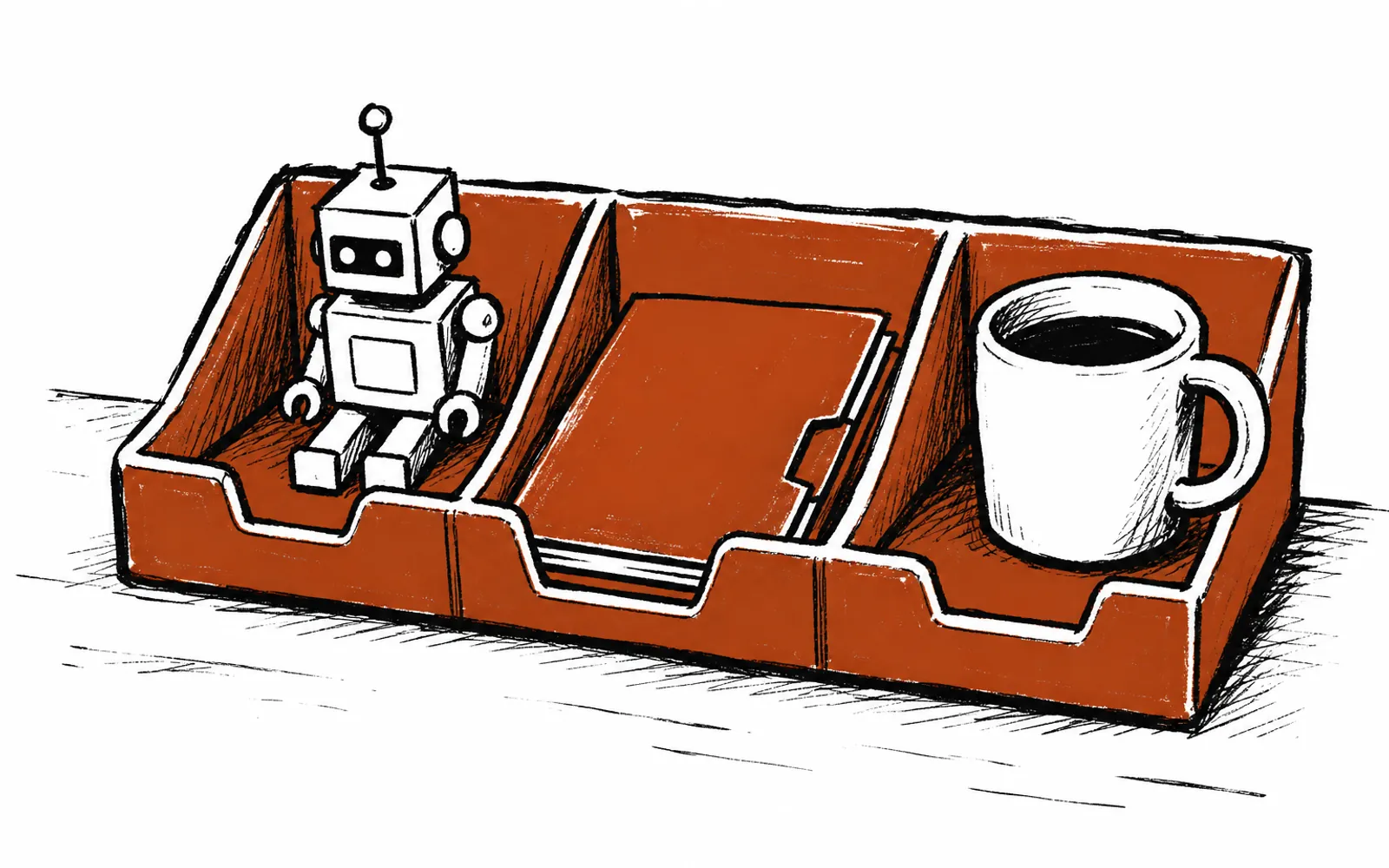
Here is the plain version of the idea. A sorting exercise takes the admin tasks that repeat in your week and puts each one in one of three piles: AI first, human first, or neither. The test for the pile is simple. It comes down to whether the task mostly needs speed and retyping, or whether it mostly needs judgment and a relationship with a person who has a face and a name in your market.
What a chatbot does well
A chatbot is strong at the work where a fixed input becomes a fixed output. Drafting a reply to a quote request in your voice, turning meeting notes into a follow-up message, summarizing a long email thread, cleaning up a list of names or addresses, rewriting a paragraph you already have. These tasks share a shape: you could do them yourself, and you have done them before, and they still eat twenty minutes every time.
What a chatbot is not good at is being accountable. It does not know your customer's history the way your admin does after a year of phone calls, it cannot tell when a client's one-line email is actually an unhappy client, and it should not be the last set of eyes on anything that leaves the building in your name. The work around the work, the reading of a situation, stays with a person.
What your admin does well
A good part-time admin carries three things AI does not: memory of your specific customers, judgment when a situation is odd, and presence. They hear the hesitation in a voice, they know which vendor invoice has been wrong twice before, and they can be trusted to handle a detail that is unique to your business. If you take those away, you have turned a person into a typist, and that is the outcome the sorting exercise exists to prevent.
The goal of the sort is not to shrink your admin's job. It is to move the retyping off their desk so the hours you pay for go to the judgment work. Most owners who run this exercise find their admin was spending most of their hours on the work a computer could do, and the interesting work was piling up behind it.
The sorting exercise
You need one week of your own week, a pad of paper, and about thirty minutes at the end of it. You do not need any paid tool to run the sort. If you want to test an AI draft at the end, one subscription such as ChatGPT or Claude is enough, and you may already have it.
- 01List the repeats
For one week, write down every admin task you or your part-time person does more than once.
- 02Mark the input and the output
For each task, note what goes in and what comes out. A quote request goes in, a reply goes out.
- 03Ask the speed question
If the same input always produces the same kind of output, mark it AI-first as a candidate.
- 04Ask the judgment question
If a client would want a specific person answering, or if a bad answer costs a relationship, mark it human-first.
- 05Ask the neither question
If nobody would notice the task being gone, mark it for dropping and stop doing it.
- 06Test one AI-first task
Take the smallest AI-first item and try drafting it with AI once, then review and send it yourself.
- 07Move the freed hours
Give the time saved on the tested task to one human-first item that was getting skipped.
What the piles usually look like
The AI-first pile tends to collect the drafting, the summarizing, the reformatting, and the first-pass replies. The human-first pile collects anything involving money disputes, unhappy customers, negotiations, and anything where your reputation is on the line with a person who knows you. The neither pile, which owners skip until they run the exercise, usually has at least a few reports nobody reads and a status update that could be one line instead of a meeting.
One warning from the way this usually goes wrong. The failure mode is not giving AI too much. It is handing a task to AI, not checking the output, and having a wrong detail land in a customer's inbox. Every AI-first task still gets a human read before it goes out. That read is faster than writing it from scratch, and it keeps the quality where it needs to be.
Where the decisions get fuzzy
Some tasks sit between piles. Scheduling is the classic one. AI can draft the back-and-forth to find a time, but the person who knows the client's preferences and your real availability should confirm it. Intake forms are similar: AI can turn a phone ramble into a clean record, and a person should glance at it before it becomes the record. The way to handle the fuzzy ones is to split the task in two, give the mechanical half to AI, and keep the confirm half with your admin.
Run it this week
Nothing about this needs a purchase. The list takes a week, the sort takes half an hour, and the first test takes one sitting. If the first AI-first task works, the second one goes faster because you have the pattern. If it does not, you have spent one week learning which tasks to keep close, which is itself worth the exercise.
If you want a person to run this alongside you, that is the kind of work a fit call handles. At AZ AI Lab, the first step is a free 25-minute fit call on Zoom that looks at two tasks that repeat in your week and picks a first result worth having. It is the same exercise as the one above, with someone who has done it many times sitting next to you.